5 Billing and Invoicing
Mistakes to Avoid


Whether you’re an ISV or an MSP, the competition is tough, and Microsoft’s standards are always evolving. As a Microsoft Partner, your business is expanding, but you operate on fixed margins and face strong competition. Excel spreadsheets may be adequate for your MSP billing and invoicing solution when you’re little, but they won’t cut it as you grow.
In this blog article, we’ll go over the five most common MSP billing and invoicing mistakes Microsoft Partners make, as well as why they’re so important to avoid.
#1
It would undoubtedly be more convenient to invoice all of your clients on the first of each month. However, letting a new customer wait until the beginning of the month (or the date of your provider’s invoicing) to begin their subscription is bad for the customer experience and costs you money. You’re not nimble in your MSP billing and invoicing software if you’re unable or unwilling to invoice on the day the customer wants to start their subscription.
The same goes for license changes. If your customer wants to add two new licenses partway through the month, it’s a mistake to make them wait until their billing date just to make it simpler for your invoicing. Every day of lost revenue adds up when you’ve got hundreds of customers with thousands of licenses.


#2
For sure, invoicing your customers annually reduces your administrative effort and costs. It also gives you the money upfront. However, invoicing only once a year limits your consumers’ options and makes you appear inflexible
Companies, especially in uncertain times, do not want to commit to a year-long subscription. Month-to-month is much more preferable. And just like you prefer the cash upfront that comes from an annual subscription, your customers prefer to keep their money so they have better cash flow.
If your MSP billing and invoicing software are manual, processing monthly invoices is a ton of work.
#3
As an MSP reseller of Microsoft licenses, you’re making a mistake if you wait to invoice your customers until after you’ve received your invoice from Microsoft or an Indirect Provider. In this scenario, you see that you were charged for X number of seats for Y number of days/months) and then you invoice your customer accordingly.
But this gives you a false sense of security that you’re not losing revenue. And it’s not agile. Your customers want their MSP billing and invoicing schedule synched to their relationship with you, not your supplier.


#4
Here’s a very common scenario: Your customers pay for their licenses on the first of each month, but then they sign up for Azure mid-month and they buy a few devices towards the end of the month. Suddenly, your customer is receiving 3 or more invoices from your MSP billing and invoicing software each month. What a headache for your customer.
Instead, your customers want one invoice per month. Why? Paying a single invoice is simpler and faster, and evaluating your performance is easier. With different bills, your customer will have a far more difficult time tracking customer lifetime value and monthly recurring revenue.
#5
MSPs are most hesitant to install a self-service portal for their consumers due to a lack of control. They want their clients to speak with a salesperson if they wish to add or alter licenses. The reason? They want to control the customer interactions and journey. They also want to minimize the exposure to the risk of the customer not being able to pay for the additional licenses. And they want the opportunity to upsell them to a better plan.
But not providing self-service is a big mistake. Your customers just want to go about doing their jobs. They don’t want to be sold on something. They know if they need more licenses. They want to be able to buy them fast and on their schedule, so they can check that chore off their to-do list. You’re giving your customers a bad experience by not presenting them with a self-service portal.

These MSP billing and invoicing mistakes happen because you haven’t envisioned the full impact of the different moving parts on your MSP business. From provisioning, invoicing, and self-service to changing client needs and Microsoft’s constant adjustments, it’s exceedingly difficult to keep control of your business and scale with confidence.
Find out what changes you need to make to prevent the five most common MSP billing and invoicing mistakes—and how to overcome hurdles so you can fully scale your business development.
What is CSP billing and why is it critical for Microsoft partners?
CSP billing refers to the process Microsoft Cloud Solution Providers (CSPs) use to invoice customers for Microsoft licenses, services, and third-party solutions. Accurate, timely billing is critical because errors lead to revenue leakage, customer dissatisfaction, and increased support overhead. With the move to Microsoft’s New Commerce Experience (NCE), CSP billing complexity has increased—making automated, integrated billing tools essential.
How can automation improve CSP invoicing and subscription management?
CSP automation tools streamline invoicing, license provisioning, and reconciliation tasks. This reduces manual errors, saves time, and ensures compliance with Microsoft’s NCE rules. Automation also enables real-time synchronization with Microsoft Partner Center, making it easier to scale recurring revenue without scaling back-office complexity.
Why is manual CSP billing no longer sustainable in 2025?
Manual CSP billing can’t keep up with Microsoft’s evolving licensing models, frequent SKU updates, and asynchronous billing APIs. It leads to delays, inconsistent invoices, and missed margin opportunities. Modern CSPs need to shift from spreadsheets and siloed systems to integrated platforms that unify billing, provisioning, and CRM.
What should CSPs look for in a billing automation solution?
Here’s a common scenario: your customer pays for licenses at the start of the month, adds Azure mid-month, and then purchases devices later on. Before you know it, they’re getting three or more separate invoices. It’s not just frustrating; it’s inefficient.
Customers want one clear, consolidated invoice per month. Why? It’s faster to pay, easier to track spend, and simpler to evaluate your value. But clarity matters too. If line items are vague or pricing is inconsistent, customers may question charges, or worse, delay payment. Confusing invoices don’t just create friction, they cost you revenue.
Can automated CSP billing help reduce churn?
Yes. Automated and accurate billing enhances trust and improves the customer experience. When combined with subscription visibility, proactive renewal reminders, and service bundling, it helps CSPs increase retention and reduce churn.
What is the connection between CSP billing and Revenue Agility?
Revenue Agility is the ability to adapt pricing, repackaged offers, and subscription terms quickly in response to market or customer changes. Accurate, real-time billing is the foundation of this agility. Without robust billing systems, CSPs cannot confidently adjust offers or scale recurring revenue models.
How does Work 365 support Microsoft CSP billing and invoicing?
Work 365 is an all-in-one CSP automation platform that integrates billing, provisioning, subscription management, CRM, and customer self-service. It provides automated invoice generation, real-time license sync, usage-based billing, and deep integration with Dynamics 365, enabling partners to grow revenue without growing operational complexity.
 https://www.work365apps.com/wp-content/uploads/2026/09/Multi-Currency-CSP-Billing.png 320 485 Amar Patil https://work365apps.com/wp-content/uploads/2025/05/logo-small-size.png Amar Patil2026-09-23 10:00:362026-09-29 10:04:56Multi-Currency CSP Billing: How Microsoft Partners Manage FX, Pricing, Reconciliation and Margin
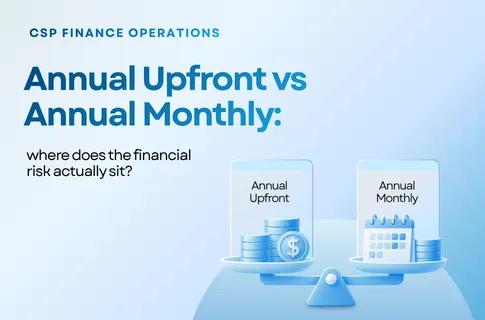 https://www.work365apps.com/wp-content/uploads/2026/09/CSP-FINANCE-OPERATIONS.png 320 485 Amar Patil https://work365apps.com/wp-content/uploads/2025/05/logo-small-size.png Amar Patil2026-09-15 10:02:292026-09-29 10:05:28Annual Upfront vs Annual Monthly: Where CSP Billing Risk Sits
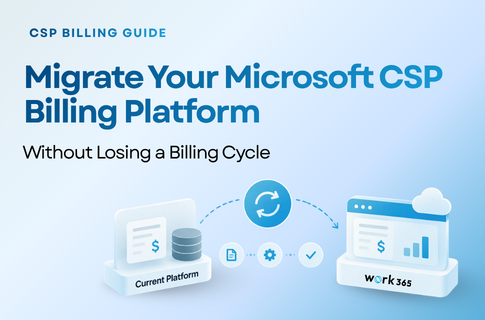 https://www.work365apps.com/wp-content/uploads/2026/09/Migrate-Your-Microsoft-CSP-Billing-Platform.png 320 485 Amar Patil https://work365apps.com/wp-content/uploads/2025/05/logo-small-size.png Amar Patil2026-08-14 10:03:302026-09-29 10:05:44How to Migrate Your Microsoft CSP Billing Platform Without Losing a Billing Cycle
 https://www.work365apps.com/wp-content/uploads/2026/09/2.png 320 485 Amar Patil https://work365apps.com/wp-content/uploads/2025/05/logo-small-size.png Amar Patil2026-08-05 09:57:562026-09-29 10:04:21Renewal Discipline: How CSPs Protect Revenue in 2026
 https://www.work365apps.com/wp-content/uploads/2026/08/turn-reservations.png 1019 1543 Amar Patil https://work365apps.com/wp-content/uploads/2025/05/logo-small-size.png Amar Patil2026-07-31 03:47:062026-08-11 03:53:00How to bill Azure Reserved Instances without revenue leakage
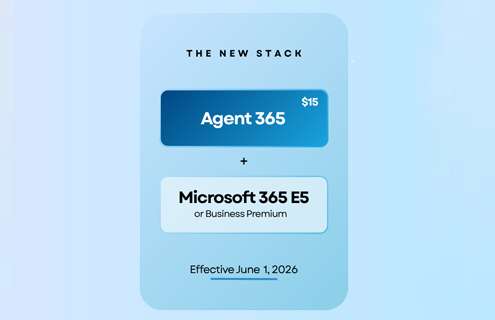 https://www.work365apps.com/wp-content/uploads/2026/07/Microsofts-New-Agent-365-Prerequisite.jpg 320 495 Amar Patil https://work365apps.com/wp-content/uploads/2025/05/logo-small-size.png Amar Patil2026-07-01 04:00:372026-07-01 04:55:28Microsoft’s New Agent 365 Prerequisite Is Live: What It Changes for Your Billing and Provisioning
Products

Solutions
Resources
Company
Reach Us
11710 Plaza America Dr. Suite 2000, Reston, VA 20190, USA
sales@work365apps.com
+1-571-429-5171


 Why Your Subscription Billing Platform Must Integrate with Other Business S...