Why Billing Is Complicated for Microsoft ISVs And How Billing Automation Can Help
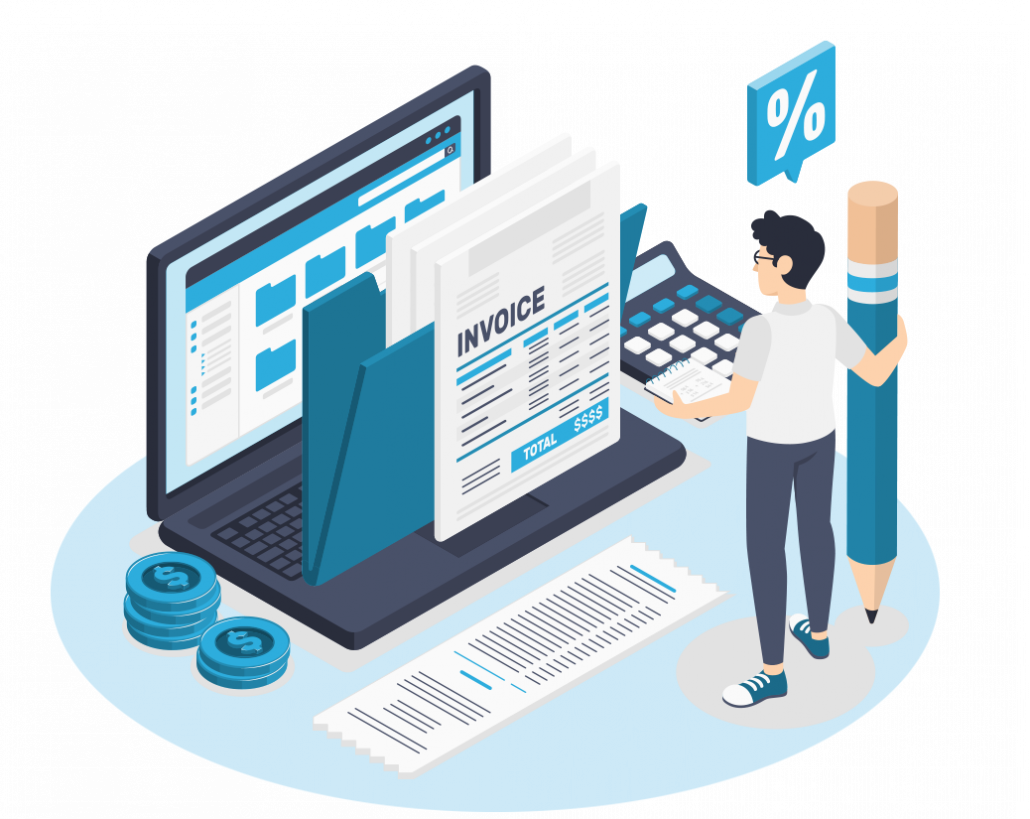

The business landscape for ISVs has become extremely competitive. With so many players operating, new evolving trends, and so many disruptive technologies emerging, navigating through the complexities is a Herculean task. This is especially evident in the billing arena, where challenges are only intensifying with each passing day.
Read on to learn more about these challenges and how billing automation can help!
When it comes to enabling seamless, timely, and accurate billing, the challenges faced by Microsoft ISVs are many. Here’s looking at some of the top billing challenges of Microsoft ISVs:
Here are 7 best billing practices to follow for improving customer satisfaction,
and growing recurring revenue.
#1
For many Microsoft ISVs, manual billing reconciliation and payment collection can take upwards of 10 hours a month for just 15 recurring customer invoices. This struggle worsens as the volume and types of services provided escalate.
Enabling auto-renewal becomes extremely difficult, especially since frequent coordination between accounting, sales, and operations teams is needed to collect all the data necessary to just generate invoices accurately – which is not only an error-prone and time-consuming process; it also requires using several different systems to accomplish all these tasks.


#2
One of the biggest challenges Microsoft ISVs face with respect to billing is price indexation. Typically, when an ISV gets into Index Pricing with one customer for a particular product, it means that they let go of the universal index for all customers and need to offer different pricing to their customers based on the customers’ size, and business needs, or strategic value.
At the same time, the high reliance on inconsistent spreadsheet templates to enable indexation results in hundreds of thousands of variations. In the long run, this can lead to substantial administrative overhead along with several far-reaching risks associated with manual errors, restricting the Microsoft ISV’s ability to effectively track margin performance over time. Manual update of existing contracts with the latest indexes and the inability to review and revise formulas in a timely and systematic manner further leads to eroded margins.
#3
Regardless of business size, companies want to be able to easily view the impact of payments data and inventory throughput and integrate it with other parts of their businesses. The inability to build or acquire software that delivers a holistic view of their businesses impacts the efforts to streamline their businesses leading to slower decision-making and a negative impact on profitability.
But manually integrating systems and piecemealing critical information together not only slows down business decision-making; it also puts Microsoft ISVs at a competitive disadvantage.


#4
Regardless of the size of the business, Microsoft ISVs want to enable enterprise visibility. They want to be able to easily view the impact of payment data on other parts of their business as well as integrate this data with other systems and processes.
But in the absence of automated systems or tools, they often struggle to do so. Since they are not able to seamlessly tie payment data into their ISV software, they fail to get timely and accurate insights about customers and payments.
#5
For growing Microsoft ISVs, pricing products or services across various target markets to suit different demand rates and price points is extremely important.
But without the right platform in place, incentivizing their customers, qualifying them for discounts, and pushing them to buy more can get difficult. Without knowing what the customers want or what preferences they have, offering the same product with multiple price points – instead of multiple products – often gets difficult.


#6
Another common challenge faced by Microsoft ISVs is finding solutions that help standardize the invoicing and payment collection process, to better scale the business.
This includes provisioning and bundling services and offerings, calculating pro-rate based on usage, creating and delivering invoices, and ensuring on-time and accurate payment collection.
To overcome the challenges, a modern solution can help automate your billing and payments while also allowing you to scale and grow your recurring revenue. It can streamline the billing process, helping you grow your monthly recurring revenue.
Using a modern billing automation solution, you can:
• Automatically send invoices as well as charge and collect bills for quick and accurate billing and invoicing
• Enable seamless integration with a host of partner and payment systems for improved transparency and visibility
• Enjoy bundling with license, usage, and service-based subscriptions as well as multi-currency and multi-region capabilities
• Automatically sync to your accounting system and overcome issues automated provisioning, channel-based sales, and billing models
• Leverage an array of built-in dashboards and reports to track un-invoiced changelogs, contracts that are up for renewal as well as subscription costs and profitability metrics
• Receive threshold alerts for usage-based invoices to have complete control over the billing process and ensure bills are paid on time
If billing has always been a complex process for your ISV business, it’s time to embrace a modern billing automation solution to streamline your billing management. By tackling all issues that plague everyday operational efficiency, a modern platform like Work 365 can help automate the recurring billing process to deliver better service, scale the business, and ensure accurate invoices on time every single time.
Through deep and seamless integration with existing payment and accounting systems, the platform can directly accept payments from automatically generated invoices and sync with the system of your choice. It thus helps you deal with the high volume of complex invoices, streamlining your sales, and growing your monthly recurring revenue.
Want to explore Work 365 subscription billing solution capabilities?
Join us for a live weekly product demo.
 https://www.work365apps.com/wp-content/uploads/2026/09/Multi-Currency-CSP-Billing.png 320 485 Amar Patil https://work365apps.com/wp-content/uploads/2025/05/logo-small-size.png Amar Patil2026-09-23 10:00:362026-09-29 10:04:56Multi-Currency CSP Billing: How Microsoft Partners Manage FX, Pricing, Reconciliation and Margin
 https://www.work365apps.com/wp-content/uploads/2026/09/CSP-FINANCE-OPERATIONS.png 320 485 Amar Patil https://work365apps.com/wp-content/uploads/2025/05/logo-small-size.png Amar Patil2026-09-15 10:02:292026-09-29 10:05:28Annual Upfront vs Annual Monthly: Where CSP Billing Risk Sits
 https://www.work365apps.com/wp-content/uploads/2026/09/Migrate-Your-Microsoft-CSP-Billing-Platform.png 320 485 Amar Patil https://work365apps.com/wp-content/uploads/2025/05/logo-small-size.png Amar Patil2026-08-14 10:03:302026-09-29 10:05:44How to Migrate Your Microsoft CSP Billing Platform Without Losing a Billing Cycle
 https://www.work365apps.com/wp-content/uploads/2026/09/2.png 320 485 Amar Patil https://work365apps.com/wp-content/uploads/2025/05/logo-small-size.png Amar Patil2026-08-05 09:57:562026-09-29 10:04:21Renewal Discipline: How CSPs Protect Revenue in 2026
 https://www.work365apps.com/wp-content/uploads/2026/08/turn-reservations.png 1019 1543 Amar Patil https://work365apps.com/wp-content/uploads/2025/05/logo-small-size.png Amar Patil2026-07-31 03:47:062026-08-11 03:53:00How to bill Azure Reserved Instances without revenue leakage
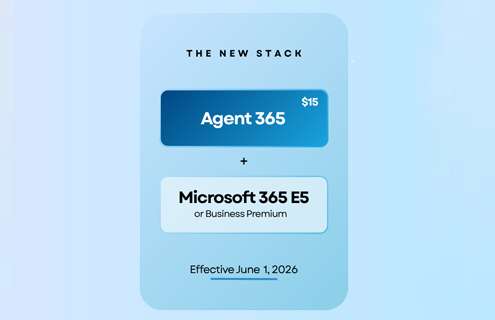 https://www.work365apps.com/wp-content/uploads/2026/07/Microsofts-New-Agent-365-Prerequisite.jpg 320 495 Amar Patil https://work365apps.com/wp-content/uploads/2025/05/logo-small-size.png Amar Patil2026-07-01 04:00:372026-07-01 04:55:28Microsoft’s New Agent 365 Prerequisite Is Live: What It Changes for Your Billing and Provisioning
Products

Solutions
Resources
Company
Reach Us
11710 Plaza America Dr. Suite 2000, Reston, VA 20190, USA
sales@work365apps.com
+1-571-429-5171