Work 365 Version Handles Microsoft’s New Control Panel Vendor Program Security Requirements And MFA

Microsoft recently announced new mandatory security requirements that tackle potential security risks from unauthorized access to the Microsoft Partner Center, the CPV program. A Control Panel Vendor (CPV) is an independent software vendor that develops applications for use by Cloud Solution Provider (CSP) partners to enable them to integrate their systems with Partner Center APIs.
The new security model from Microsoft is based on the requirements:
5 quick tips to improve revenue with smarter and
efficient provisioning and subscription management
Direct Partners and In-Direct Partners using Work 365 have varying uses:

(figure 1)
Figure 1 above shows how Partners and users access the Partner Center and Services and subscriptions for their Customers. Work 365 (CPV) is the automation and control system between the partner center that ultimately leads to the provisioning of services and a financial impact from Microsoft.
Lost credentials (or claims of lost credentials, including sharing of credentials within a partner organization) can result in the provisioning of unauthorized services. Many CPVs are SaaS applications and need to store the credentials within their systems, which represents a potential security risk.
Work 365 is Compliant with Control Panel Vendor Security Requirements.
Work 365’s fundamental architected is to comply with and meet the security requirements.
Work 365’s version 2.1 security enhancements allow a CSP to control access and permissions through the Dynamics 365 security model. Because this model is tied to the partner’s Azure ID in order to use Work 365, no third-party system is required.
Work 365 then accesses the Partner Center through a flexible provider model.

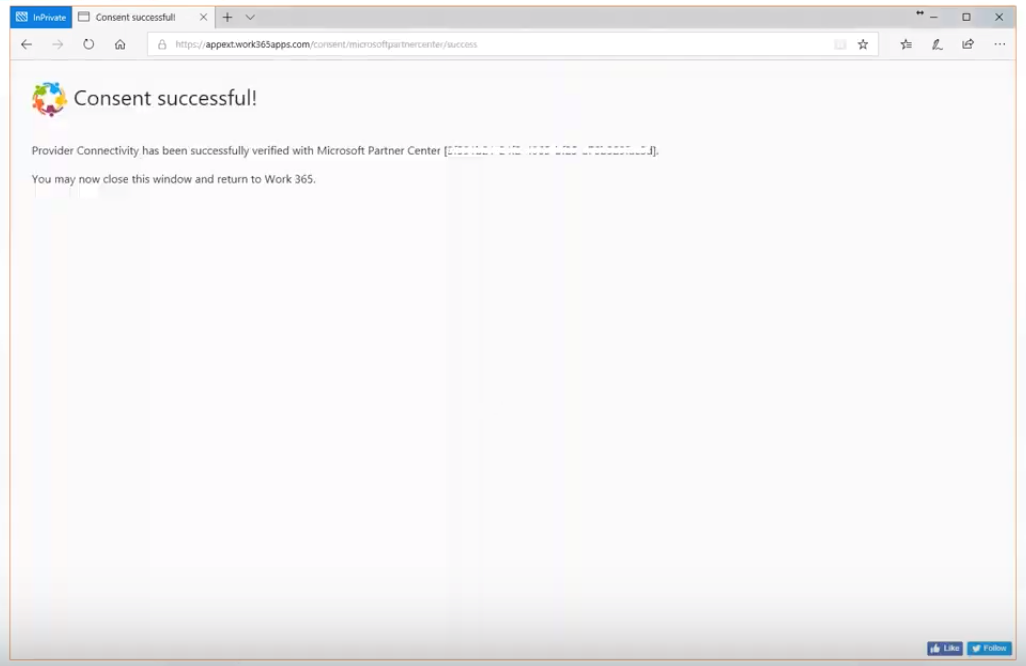
Work 365 enables CSPs to satisfy the new CPV security requirements regardless of direct or indirect partner status. Read more about how Work 365 can help with your recurring billing and payment collections under the latest CPV program.
Understand changes a Microsoft Partner needs to make to eliminate roadblocks and scale business growth.
 https://www.work365apps.com/wp-content/uploads/2025/11/Why-Recurring-Billing.png 435 705 Amar Patil https://work365apps.com/wp-content/uploads/2025/05/logo-small-size.png Amar Patil2025-11-11 07:21:392025-11-11 07:25:55Why Recurring Billing in Business Central Still Falls Short for CSPs
 https://www.work365apps.com/wp-content/uploads/2025/02/5.png 720 1280 Amar Patil https://work365apps.com/wp-content/uploads/2025/05/logo-small-size.png Amar Patil2025-02-04 08:23:102025-02-06 07:31:04Unlocking the Future of Promotion Management
 https://www.work365apps.com/wp-content/uploads/2023/12/sales-tax-thumb-1.png 712 1000 Amar Patil https://work365apps.com/wp-content/uploads/2025/05/logo-small-size.png Amar Patil2023-12-11 09:20:512024-07-22 08:26:07A Webinar Recap of Sales Tax Management with Work 365 and Avalara Integration
 https://www.work365apps.com/wp-content/uploads/2023/10/avalara-integration.png 712 1000 Amar Patil https://work365apps.com/wp-content/uploads/2025/05/logo-small-size.png Amar Patil2023-10-12 05:31:182026-01-14 02:39:17Simplifying Sales Tax Compliance: Work 365’s Certified Avalara Integration
 https://www.work365apps.com/wp-content/uploads/2022/05/integrated-crm-thumb.png 185 260 Amar Patil https://work365apps.com/wp-content/uploads/2025/05/logo-small-size.png Amar Patil2022-05-25 09:42:572025-03-24 07:25:53The Business Benefits of an Integrated CRM Solution for Microsoft Partners
 https://www.work365apps.com/wp-content/uploads/2022/03/connect-wise-work-365-feature.png 185 260 Amar Patil https://work365apps.com/wp-content/uploads/2025/05/logo-small-size.png Amar Patil2022-03-28 13:13:152025-09-24 06:25:34ConnectWise + Work 365 – The Winning Combo to Sustain Business Profitably for MSPs
Products

Solutions
Resources
Company
Reach Us
11710 Plaza America Dr. Suite 2000, Reston, VA 20190, USA
sales@work365apps.com
+1-571-429-5171


 E-commerce and Self-Service with Work 365