Aligning Billing with Sales for MSPs (Process, Tools and Mindset)

Many, in fact, most MSPs today have less than 100 customers or less than $2 million in cloud revenue, despite the rapid growth of services from modern work, infrastructure, and applications for over a decade. MSPs offer valuable services, including infrastructure management, ensuring productivity, security, and even outsourced IT help desks.
So why the modest growth?
Key Factors Impacting Growth
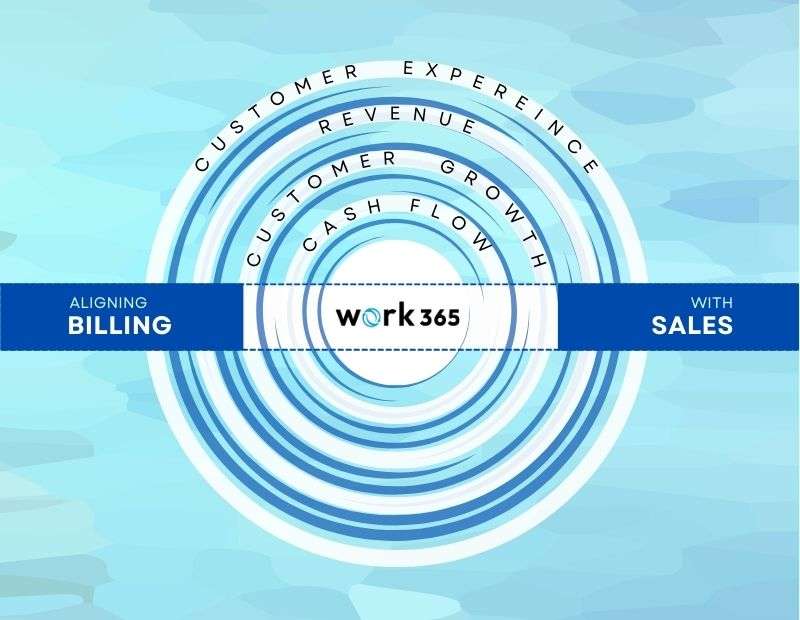
Among all the potential reasons, one consistent theme across these MSPs is the alignment and complexities in their Sales and Billing processes.
MSPs will curate products for modern work, security, and backup, sourcing them from OEMs like Microsoft or a Distributor and package them with their own services to sell as bundled offerings.
There are some inherent natural complexities and potential issues that need to be addressed in aligning sales and billing processes for growth within the MSP service offerings.
Sales Contracts and Vendor Management
- Multiple Vendors Contracts
- Multiple Provisioning Systems
- Multiple Invoices from Multiple Vendors
One of the most common reasons for slow growth for Cloud Service Providers (CSPs) is the complexities that MSPs introduce into their Sales and Billing processes, often by customizing contracts and packages tailored to each client’s needs.
Balancing Sales, Finance, and Support
The Sales function at the MSP brings on new customers while optimizing:
- margins
- customer experience
- contract duration and retention
Finance and billing, on the other hand, may have specific ways of managing vendor invoices for financial processes, billing, and reconciliation.
The customer support and services team must be proficient in different cloud products, support, and consultation, as well as dealing with provisioning systems from vendors and distributors.
The Three Amigos: Sales, Provisioning, and Billing
In a recent blog, we addressed the importance and alignment of the three amigos: Sales/Quoting, Provisioning, and Billing.
Sales/Quoting: What is promised to the customer and what is expected by the customer from a contractual standpoint. Sales will align value by providing different pricing and go-to-market strategies.
Provisioning: What is provisioned! In the case of Microsoft CSP Partners, the most common way to provision Microsoft online services is either directly on Partner Center (if you are a Direct Partner) or through a Distributor.
Billing: Collecting the revenue associated with the sale!
Case Studies: Complex Sales and Billing Processes
MSP A: I recently encountered an MSP who had negotiated contracts with pricing tiers and lockups for their customers on the Microsoft cloud. Their contracts stipulated that:
- Each customer had a minimum purchase requirement for specific licenses/services.
- For each customer, they would specify increments (blocks) for purchasing additional licenses and negotiate minimum block purchases. Customers could not just add one seat but needed to increase their consumption by a specific block (e.g., from 5 to 10 seats if their user count increased from 5 to 6).
- Once the quantity increased by that specific increment, they were locked in and couldn’t reduce the quantity. They would hold the billing at the new level, even if the quantity dropped back below the lower bound of that current ‘tier.’
They wanted to provision only the actual seat counts into Partner Center, regardless of the total quantity being billed to the customer.
Provisioning and Billing Example:
For instance, a license has a minimum quantity of 10 licenses and is increased in increments of 5 seats at a time. At the outset, the customer had 8 seats of that license.
- The MSP would like that quantity of 8 to be what they are paying to Microsoft (i.e., what is synced to Partner Center).
- However, they would like to bill the customer for 10 seats of that license. If the quantity consumed then increases to 11 seats, they would up the billing to 15 seats. 15 seats would then become the new minimum threshold for that subscription.
- If the customer were to drop the usage of licenses by 2 seats and go back down to 8 consumed seats, the customer would continue to be billed for 15 seats. The seats provisioned would now be 8!
The Objectives They Focused On:
- Driving ARR growth
- Optimizing margin
- Retention
- Overcorrection for changes requested by a customer
MSP B: MSP B has been in business for over 15 years and has only about 50 customers.
They developed a bundled offering and allowed their customers to pay monthly (that’s a nice start!). However, they decided to purchase annual commitments (because they are 20% cheaper) and provide the customer with the flexibility to increase and decrease their service counts every month. They would invoice them only for the users that were actually using the system, regardless of how many licenses were provisioned.
Provisioning and Billing Examples:
For instance, a customer started their relationship with 20 seats. They would provision 20 seats with an annual commitment. If the customer reduced the seat count to 19 seats (which rarely happened), they would still have to retain the 20 seats but determine every month how many users were active and invoice only for those users. If the customer added seats, they would add a new monthly subscription or, in some cases, increase the quantity of the annual subscription. It depended on the situation, the customer, and the type of package.
The Objectives Here:
- Product differentiation
- Customer experience
- Margin optimization
Addressing Alignment Issues
For both MSP A and MSP B, challenges created alignment issues on the Sales and Billing processes that impacted growth.
For MSP A, sales contracts and agreements are customized in each case. The setup for each customer, on their tiers and blocks, would need attention during customer onboarding.
For MSP B, billing is difficult to automate, and a manual step is required to verify the number of active users for every billing cycle.
Operational Challenges and Margin Erosion
For both MSP A and B, gross margins may look healthy, but the G&A would require high overheads and billing errors that could erode net margin.
For both MSP A and B, provisioning changes would be a manual effort, requiring labor for every change that their end customer intends to make.
Both MSP A and B can’t offer a self-service portal, so there is a labor component associated with any changes, and they can’t use automation to scale.
Navigating Microsoft’s New Commerce Experience
For MSPs selling Microsoft 365, Microsoft has sent signals or even direct messages with the New Commerce Experience (NCE) contract terms! Microsoft’s evolving offerings, programs, and licensing structure are deeply integrated with services like Azure for margins on Partner Earned Credit, which conflicts with many other vendors’ simpler licensing terms.
The Impact on Gross Margins
Although 40% is a healthy target for gross margins, when the processes for provisioning and billing are manual or maintained in different systems, the net margin and growth are impacted with the overheads and heavy reliance on manual work.
Strategic Implications and Business Growth
This friction between sales and billing has larger implications at the strategic level and affects the valuation, preventing the business from growing!
I have consistently encountered MSP A and MSP B, and while I appreciate their creativity in trying to maintain margins, more often than not, the misalignment between sales and billing prevents them from using tools to help automate their processes for growth.
Ready to take your business to the next level? Discover how Work 365 can help you thrive in today’s market..
About the Author
Ismail Nalwala is the CEO of Work 365, a CSP Management and Billing application built on Microsoft Dynamics 365 and Power Platform. Our global team is made up of game-changers who bring a unique combination of technical expertise, client empathy, and nerdy humor. Number crunchers and technologists at heart, our true passion is helping our customers succeed.