Managing CSP Billing with an ERP like Business Central: A Guide for Microsoft CSPs

Recently there has been a lot of activity related to Subscription Billing with Dynamics Business Applications, like Business Central and Finance & Operations.
Recurring Revenue and Subscription Billing are important value creators for any organization, especially Microsoft CSP Partners.
After all, Business Central has Subscription Billing, so Subscription Billing must be important.
Is an accounting system the right place to manage subscriptions and billing for Microsoft CSP Partners?
Using an ERP as a standalone solution for CSP Billing is missing the forest for the trees when it comes to addressing all the use cases and personas involved in getting the right outcomes for the business.
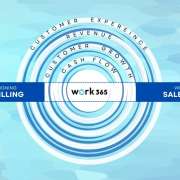
CSP Billing is the result of managing a series of orchestrated steps and revenue events from the customer and your internal team that touch various parts of an organization:
- Sales
- Support Desk
- Licensing Specialists
- Billing Operations
- Customer Success
Each group has their specific needs and may use different tools and applications:

All these users touch the customer to either:
- Setup a new relationship
- Renew the customer
- Upsell
- Support the customer
Things that need to be done for CSP Billing:

The way to handle Subscription Billing with an ERP like Business Central is to rely on an invoice from a vendor, either Microsoft or the Distributor.
Another way is to replicate subscription data along with all the subscription events and pricing in the system.
Using an ERP for CSP Billing would mean data is in silos and creates operational inefficiencies:
- The product catalog and pricing are in different systems
- There is no unified go-to-market strategy for pricing in a CRM
- The portal is an add-on, and the changes made are not aligned with the billing
- Multiple portals to combine all the licensing, services, and billing information
- The subscription data the customer-facing team manually maintains is in a separate system–likely in a spreadsheet
- The sales team doesn’t have access to billing or accurate revenue data, which is locked in the ERP
- Billing relies on reconciliation files and invoices, so errors and delays from the vendor are propagated forward
- The renewal dates and pricing changes require coordination or result in misses
- Reconciling customer invoices across different providers is nearly impossible if the subscription data doesn’t sync
Waiting for Microsoft or distributor invoices before invoicing your customers for licenses is like waiting for your subcontractor to invoice you before billing your customers for project work. Systems integrators maintain their time logs and invoice their customers based on what is recorded rather than using the vendor to reconcile or confirm the billing.
There are excellent examples and models of what good technology infrastructure looks like.
In a recent conversation with a Partner using Business Central for Subscription Billing on ERP, their team ended up at a stalemate due to conflicting agendas. Finance’s goal was single-minded— they wanted revenue recognition.
Internally:
- The leadership couldn’t agree on the product catalog structure
- The sellers and billers lack pricing visibility
- The customer renewal team did not have visibility into subscription data for renewal management
- The product and support team had an independent portal that was unable to support their end customer’s self-service needs
CSP Billing, and, in general, Subscription Billing, is challenging due to all the revenue-related events like additions, reductions, upgrades, or changes in plans that take place with a customer’s services.
Using an ERP for Subscription Billing is like assuming the only use case for an ERP system is to file taxes for the tax authority! Certainly, this is an important use case, but the correct usage of the ERP application should result in correct tax filing.
Billing for CSP subscriptions through a reconciliation file in an ERP is like filing a tax report from paper copies of your receipts.
Managing and orchestrating revenue events within the organization’s workflow will ultimately result in accurate billing outcomes. Focusing just on invoicing in the ERP system for CSP management misses the opportunity to connect the dots across your organization.
Check out my recent webinar on this topic!
About the Author:
Ismail Nalwala is the CEO of Work 365, a CSP Management and Billing application built on Microsoft Dynamics 365 and Power Platform. Our global team is made up of game-changers who bring a unique combination of technical expertise, client empathy, and nerdy humor. Number crunchers and technologists at heart, our true passion is helping our customers succeed. Connect with Ismail on LinkedIn.